For Texas owners
Tax Deadline This Year. A Texas address and the May report
The practice is in Dallas. We take Texas owners on a call, and Thursday 15 October stays the federal day it already was.
The call starts in Dallas
The practice sits in Dallas. We serve Texas owners from that desk, on a call, and we do not ask you to drive in. A reader in Dallas or Fort Worth can treat the phone as the office door. Readers outside Dallas and Fort Worth can take the plain line that we are all Texans, and the work is still that same remote call.
Have the unsigned federal form in reach before you dial. We match it to Friday 15 January 2027, the federal day in front of this Sunday, 25 October 2026, and we also ask whether the May company report is already in. One call can hold both questions. They do not share a due day, and we will not pretend they do.
When the call opens you reach Steven Palmieri in the Tax CFO role, also called the Entrepreneur's CFO, and the first fact we want is which federal form is still unsigned. On this page the Tax CFO question is which day you can still change. An accountant can total a Thursday that has already passed. Thursday 15 October 2026 has passed, so it no longer belongs to an unsigned form. The decision left, while this year is open, is what the January estimate should say, and whether May's report is filed, including the short one in a year with no tax.
A Texas address leaves Thursday where it is
Thursday 15 October 2026 is a Thursday in every state. A Texas address does not move it. Wednesday 15 April 2026 does not move because the return uses a Texas address. Friday 15 January 2027 does not move for that reason either. Those three days are federal. The address on the return is not a lever that slides them.
A federal day moves when it lands on a Saturday, a Sunday, or a legal holiday, and then it moves to the next business day. That rule already made 15 March 2026 into Monday 16 March 2026, because the 15th was a Sunday. Thursday 15 October 2026 is itself a business day, so the rule does not hand it a later seat. An extension, when one was filed on time, is what puts an individual return or a calendar year Form 1120 on that Thursday. The extension moved the signature. The April balance stayed in April.
Texas does not tax a person's wages, and Texas does not tax a person's income. The income tax day on this site stays the federal day. If the IRS has posted a later date after a disaster, that later date is the date printed on the notice for the area the notice names. The address line saying Texas does not create the relief by itself. Bring the notice if you think one applies, and we will read the date the IRS actually printed.
Passed federal days stay passed for a Texas filer the same way they stay passed for anyone else. Monday 16 March 2026 is gone for calendar year S corporations and partnerships. Tuesday 15 September 2026 is gone, both as an estimate day and as the extended company day. Monday 15 June 2026 is gone. 31 January 2026 is gone for many wage and information forms. None of those becomes Thursday because the company has a Texas address.
May is the company report
Beside the federal list, a Texas company has a May report. Each May, a Texas company pays for the privilege of doing business in the state, and that yearly charge is the franchise tax. If the only return you file is a personal return, and you never organized a company, May's franchise report is usually not yours. The limited liability company is on the May list even when it has only one owner. Corporations file this report. S corporations file it. Partnerships file it. The Comptroller's franchise pages are the place to confirm which entities sit on that list in the year you are filing.
The ordinary day is 15 May. In 2026 that day is a Friday, so Friday 15 May 2026 is the day. In 2027, 15 May falls on a Saturday, so the report waits for the next day state offices are open. Read that Monday on the Comptroller calendar before you block it, because a holiday sitting on the moved day would push it again. Memorial Day in 2027 falls on 31 May, later than that Monday, so the holiday people usually fear in May does not sit on the moved day. Confirm the calendar anyway. We do not print a shifted August or November extension date from memory. If you extend, read the Comptroller extension page for the payment share it asks and for the later day that applies to the way you pay.
On the 2026 report and the 2027 report, revenue that stops at $2,650,000 leaves the franchise tax at zero, and the long form stays in the drawer. Even in a no tax year the short report can still be due, either Form 05-102 for the public information or Form 05-167 for ownership. Skipping the short report is the mistake that looks harmless in a year with no tax. When tax is actually due, a retailer or a wholesaler is often on the 0.375 percent rate. Other companies are often on 0.75 percent. Pay that can be counted for one person stops at $480,000 on the 2026 and 2027 row.
The 2024 and 2025 row stands on its own published pair. The no tax threshold on that row is $2,470,000, and the pay cap is $450,000. A 2024 figure does not belong in a sentence about a 2026 report. When revenue is $20 million or under, an EZ computation at 0.331 percent can be chosen, and that choice gives up the margin deductions the long form would have allowed. We will not redraw those margin paths on this page. If the long form is the one you file, the closed books are what the paths stand on, and we walk them on the call.
A report that arrives late draws a $50 penalty. If the tax arrives in the first 30 days after the due day, the added charge is 5 percent of that tax. Once the tax is more than 30 days past due, that added charge rises to 10 percent. Interest starts on day 61, and the percent is the one printed on the Comptroller interest page that day. The interest percent stays on that Comptroller page, and this paragraph leaves the number unread. If the short report is skipped long enough for forfeiture, a Texas court can refuse to hear the company as the one bringing a case and as the one answering a case, and certain company debts can become the debts of the people who run it. The officer list on the information report is what you sign. Registered agent updates are a Secretary of State filing, separate from the May franchise packet.
Read the year's figures on the Comptroller franchise page before you rely on a memory of last May. The sales tax calendar, further down this page, is a third list. May does not collect sales tax, and the 20th does not file the franchise report.
The sales tax day is the 20th
Sales tax keeps its own calendar, apart from Thursday and apart from May. The state part is 6.25 percent. Local pieces, added together, stop at 2 percent. One sale stops at 8.25 percent. The address of the sale picks the local piece. Look that address up on the Comptroller rate locator on the day of the sale. This page will not print a city rate from memory, because a city rate is a lookup.
The permit letter, once the Comptroller has approved it, tells you whether sales tax is monthly, quarterly, or yearly. A monthly filer sends April's sales by 20 May, and each later month follows the 20th of the next month. If the letter says quarterly, the sales tax months on your wall are April, July, October, and January, and no other month takes that report. A yearly filer uses 20 January for the year that just ended. When the 20th is a Saturday, a Sunday, or an observed holiday, filing moves to the next day offices are open.
A shop that rang up today's sales still has this 20th if the letter says monthly. The receipt in the drawer and the sales tax report are both real, and they are not the same afternoon. The closed month has to separate taxed sales, sales a marketplace already collected, and purchases held for resale. A resale certificate is the paper that supports the untaxed purchase. A permit number written in the margin is a different piece of paper, and it does not do that job.
The Comptroller sales page is where the 20th, the rate cap, and the penalty shape are printed for the year you are in. A late sales tax report costs $50. The first 30 days past due add 5 percent of the sales tax, and a payment after those 30 days adds 10 percent. Interest on that sales tax also starts on day 61. Read the percent on the live interest page rather than repeating a rate from an older year.
What to have on the call
Bring three things. The federal form that is still open, so we can say whether Thursday 15 October 2026, Friday 15 January 2027, or a day already past is the one attached to it. A yes or no on the May report, including the short information report in a year when franchise tax is not due. The last month the books were closed, because a return and a franchise report both stand on a month the bank has already agreed with.
Wage deposits stay on the calendar of the payroll provider you already use, and our part of payroll is the setup conversation only. A deposit day on that provider's calendar stays off Thursday, and it stays off the 20th, unless the two dates happen to share a box on the wall. We will separate them before we talk about either one. If the books are only closed through June, say June. A named open month is more useful than a guess that the year is finished.
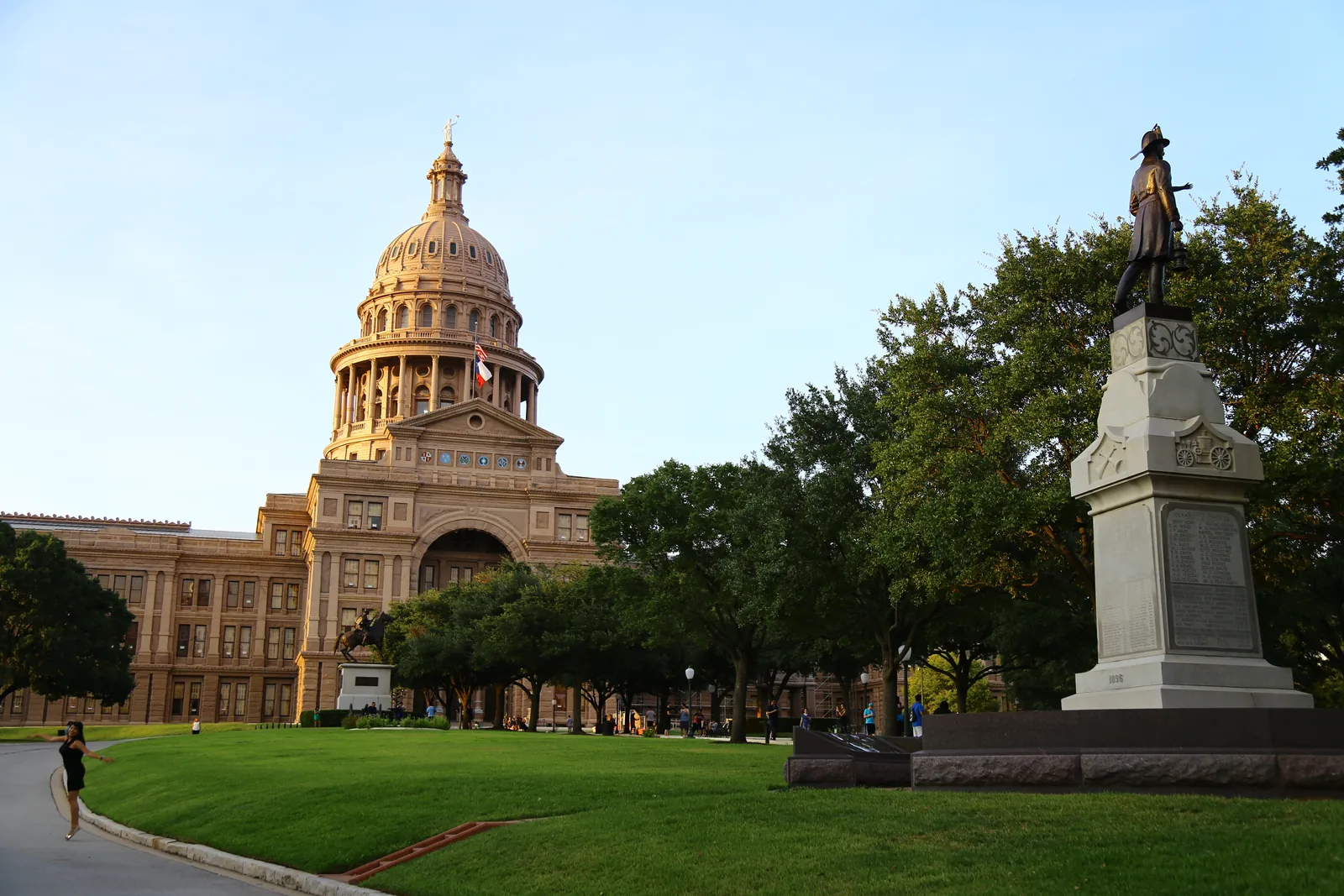
Look at the picture at the top of this page and you are seeing the Texas State Capitol, south lawn, dome in the frame, late light. Chmorich made the photograph and shared it on Wikimedia Commons as File:Texas_State_Capitol_-_Front.jpg under Creative Commons Attribution-ShareAlike 4.0. The practice did not take it. The building is in Austin. The call is still the Dallas desk.
The longer federal list, for a reader who came here from a Thursday question, sits on the dates still ahead. Comptroller pages worth opening before the call are the franchise tax page, the sales tax page, and the interest page.
Name the form still open.
Say which federal form is still open, whether the May report is in, and the last month the books were closed.
You will be talking to the Steven Palmieri practice.